Clenbuterol 40 mcg Tablets: Uses, Safety, Side Effects and Risks
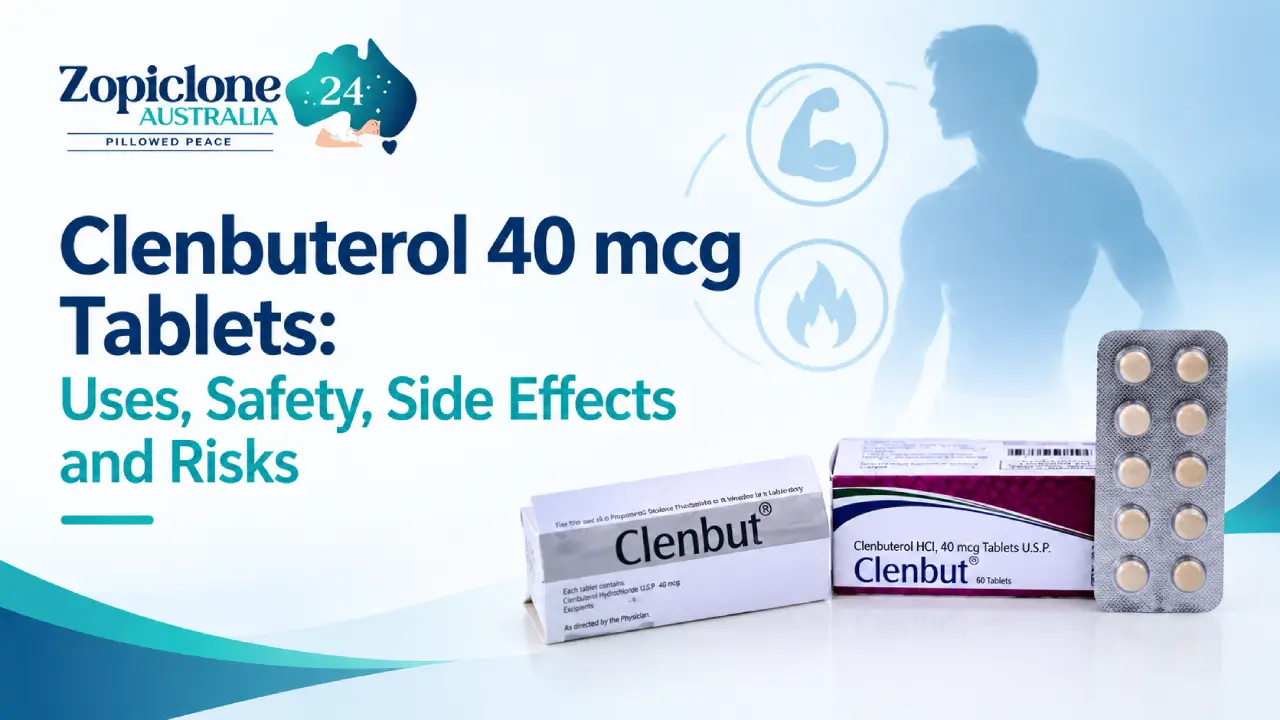
Clenbuterol is a drug that occasionally comes up in conversations about breathing problems, veterinary medicine, and, more controversially, bodybuilding and weight-loss circles. Products labelled Clenbuterol 40 mcg are sometimes sold online, often outside proper medical or pharmacy channels. This article explains what clenbuterol actually is, where it has legitimate medical use, how it works in the body, and the side effects and risks associated with it. It is general educational information only and is not an endorsement of use.
What Is Clenbuterol?
Clenbuterol is a synthetic compound belonging to a drug class called beta-2 adrenergic agonists. The form typically referenced in tablets and other products is clenbuterol hydrochloride, which is simply the salt form used to make the compound stable and usable in tablet or liquid preparations.
Beta-2 agonists work by stimulating specific receptors found in smooth muscle tissue, particularly in the airways. This is why some beta-2 agonists (like salbutamol) are used medically as bronchodilators. Clenbuterol is not classified or regulated as a dietary supplement, vitamin, or general wellness product. It is a pharmacologically active drug, and in many countries, including Australia, it is not approved for human therapeutic use.
Clenbuterol 40 mcg: Uses and Medical Background
In some countries, clenbuterol has historically been used in human medicine as a bronchodilator for conditions such as asthma, usually in tightly controlled prescription settings. In many other countries, including Australia, clenbuterol has no approved human therapeutic use; it is registered only for veterinary purposes, such as treating airway obstruction in horses.
Discussions around Clenbuterol 40 mcg tablet uses online often blur this distinction, presenting the drug as though it were a general-purpose supplement. It is important to separate:
- Legitimate medical use: limited to specific countries, specific conditions, and medical supervision
- Non-medical use, including bodybuilding or weight-loss use, which is not supported by regulatory approval and carries documented health risks
This article does not endorse or guide non-medical use.
How Does Clenbuterol Work?
Beta-2 receptors are found throughout the body, but particularly in the smooth muscle lining the airways. When stimulated, they cause airway muscles to relax, which is why beta-2 agonists can help with breathing difficulty in conditions like asthma.
However, beta-2 receptors are not confined to the lungs. They’re also present in the heart, blood vessels, and skeletal muscle. This is why clenbuterol’s effects extend well beyond the airways:
- Increased heart rate and force of heart contraction
- Changes in blood vessel tone and blood pressure
- Heightened nervous system activity (a “stimulant-like” effect)
Because the drug isn’t selective enough to affect only airway tissue, this widespread receptor stimulation is the root cause of most unwanted effects.
Clenbuterol Side Effects and Common Reactions
Reported Clenbuterol side effects vary in severity and can include:
- Tremors or shakiness, especially in the hands
- Nervousness, anxiety, or restlessness
- Increased heart rate
- Palpitations (a fluttering or pounding heartbeat)
- Headache
- Excessive sweating
- Muscle cramps
- Difficulty sleeping
It’s worth being clear here: clenbuterol is not a sleep medication, and any sleep disturbance it causes is a side effect of stimulation, not a therapeutic benefit. Some people experience only mild symptoms, while others, particularly with higher exposure or underlying heart conditions, may experience more serious cardiovascular effects.
Clenbuterol Risks and Safety Considerations
Understanding Clenbuterol risks and Clenbuterol safety requires looking beyond the tablet strength alone.
Cardiovascular risks are the most significant concern. These can include abnormal heart rhythms (arrhythmias), spikes or drops in blood pressure, and, with prolonged exposure, effects on heart muscle tissue.
Electrolyte disturbances, particularly involving potassium levels, have also been documented and can further affect heart function.
Toxicity is a real risk, particularly when products are taken in uncontrolled amounts or combined with other stimulant substances.
Additional risk factors include:
- Products sourced from unreliable or unregulated online sellers, where actual content and purity cannot be verified
- Use without medical supervision, meaning warning signs go unmonitored
- Interactions with other medications, especially other stimulants or heart medicines
Because of these risks, self-medicating with clenbuterol, for any purpose, is not something this article supports or provides guidance for.
Is Clenbuterol 40 mcg Safe?
There’s no simple answer to whether Clenbuterol 40 mcg is “safe,” because a microgram figure on a label doesn’t tell you much on its own. Safety depends on:
- The individual’s medical history, particularly heart health
- Other medications or substances being taken
- The actual quality and accuracy of the product’s contents
- Whether the product is used within an approved medical context or outside one
- The regulatory status of the product in the country of use
A number alone can’t answer a question that depends on all of these variables. This article does not recommend a dose or suggest that any dose is appropriate.
Clenbuterol vs Albuterol
People sometimes confuse clenbuterol with albuterol (salbutamol) because both are beta-2 agonists. They are not interchangeable.
| Feature | Clenbuterol | Albuterol (Salbutamol) |
|---|---|---|
| Drug class | Beta-2 adrenergic agonist | Beta-2 adrenergic agonist |
| Human medical approval (Australia) | Not approved for human use | Approved, widely prescribed |
| Typical use | Veterinary bronchodilator (e.g., horses) | Human asthma/COPD reliever inhaler |
| Duration of action | Long-acting (effects last many hours) | Short-acting (rapid onset, shorter duration) |
| Regulatory status | Restricted/veterinary only in most countries | Registered therapeutic medicine |
The key point: these drugs work on similar receptors but are regulated completely differently, and one should never be substituted for the other.
Clen 40 Tablet, Clenbuterol 20 mg Tablet and Other Strengths
Online listings use various names, including “Clen 40 Tablet” or references to a Clenbuterol 20 mg tablet, which can be confusing, and sometimes dangerously so.
A critical point: mcg (micrograms) and mg (milligrams) are not the same unit. One milligram equals 1,000 micrograms. So a reference to “20 mg” would represent 20,000 mcg, a dramatically larger quantity than a 40 mcg tablet. Mixing these units up, whether through mislabelling or misreading, can lead to serious errors. This article does not provide dosing instructions and strongly encourages readers to never assume unit equivalence themselves.
Clenbuterol Gel and Other Formulations
Clenbuterol is also marketed in other forms, including Clenbuterol gel, alongside tablets and liquids. Different formulations can have different absorption rates and concentrations. As with tablets, consumers should not assume that a product sold online, regardless of formulation, is approved, accurately labelled, or safe. Verifying formulation, concentration, and regulatory status can’t be done by simply reading a product listing.
Clenbuterol, Muscle Mass and Weight Loss Claims
Clenbuterol is often promoted in bodybuilding and weight-loss spaces with claims about fat burning, muscle preservation, and metabolic boosting. These claims largely originate from user forums and sellers, not from robust human clinical evidence. Some research (mainly in animals) has looked at effects on muscle and fat tissue, but this doesn’t translate into an approved or medically endorsed use in humans for these purposes. Claims of this kind should be treated as unverified marketing rather than medical fact.
Important Things to Know Before Considering Clenbuterol
- Clenbuterol is not approved for general human use in Australia
- Any use outside a legitimate medical context carries documented cardiovascular risk
- Product quality from unregulated sources cannot be verified
- It may interact with other medications, particularly stimulants and heart medicines
- People with existing heart conditions face heightened risk
- Self-medication without professional oversight is not advisable
FAQ
1. What is Clenbuterol 40 mcg tablet used for?
In limited medical contexts abroad, clenbuterol has been used as a bronchodilator. In Australia, it has no approved human therapeutic use and is registered only for veterinary purposes.
2. Can clenbuterol increase muscle mass?
Some animal studies have suggested effects on muscle and fat tissue, but this is not established or approved for human use, and claims about muscle-building are not supported by robust clinical evidence in people.
3. What does clenbuterol do to the brain?
As a stimulant-acting compound, clenbuterol can increase nervous system activity, which may contribute to restlessness, anxiety, and difficulty sleeping.
4. Is 40mcg of Clen too much?
Whether any amount is appropriate depends on individual health factors, medical supervision, and the product’s legitimacy, this isn’t something that can be judged from a number alone, and this article does not provide dosing advice.
5. What are the common side effects of clenbuterol?
Commonly reported effects include tremors, rapid heartbeat, sweating, headache, nervousness, and muscle cramps.
6. Is clenbuterol approved for human use in Australia?
No. In Australia, clenbuterol is not approved for human therapeutic use; it is registered for veterinary use only.
7. Is clenbuterol a sleeping medicine?
No. Clenbuterol is a stimulant-acting drug and is not used to treat insomnia. It can actually interfere with sleep as a side effect.
8. What is the difference between clenbuterol and albuterol?
Both are beta-2 agonists, but albuterol is an approved short-acting human asthma medication, while clenbuterol is longer-acting, not approved for human use in Australia, and used veterinarily.
Conclusion
Clenbuterol is a pharmacologically active beta-2 agonist with a narrow, country-specific history of medical use and a much broader, unapproved presence in bodybuilding and weight-loss circles. Products like Clenbuterol 40 mcg tablets are sometimes marketed casually online, but the drug carries genuine cardiovascular risks, unit-confusion dangers between mcg and mg, and significant uncertainty around product quality when sourced outside regulated channels. It is not a treatment for sleep problems, and no dose should be assumed safe without proper medical guidance. Anyone considering it for any reason should speak with a qualified healthcare professional first.
Disclaimer: This article is for general educational purposes only and is not medical advice. It is not a substitute for professional consultation. Always seek guidance from a qualified healthcare professional before using or considering any medicine.
| Field | Details |
|---|---|
| Written By | Dr. Michael Anderson |
| Checked By | Dr. Daniel Thompson |
| Published Date | 21 September 2026 |
| Next Reviewed | January 2027 |
| Category | Health & Wellness |
| Reading Time | 7 min |